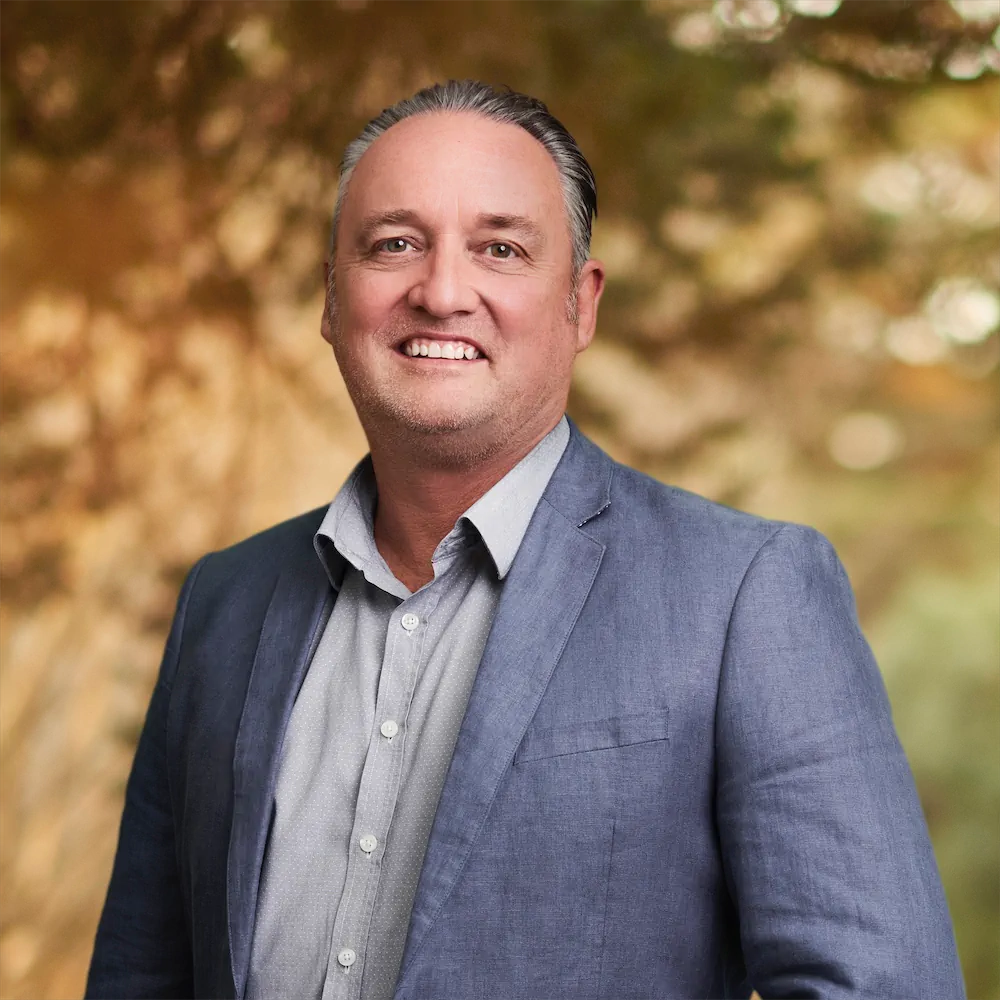
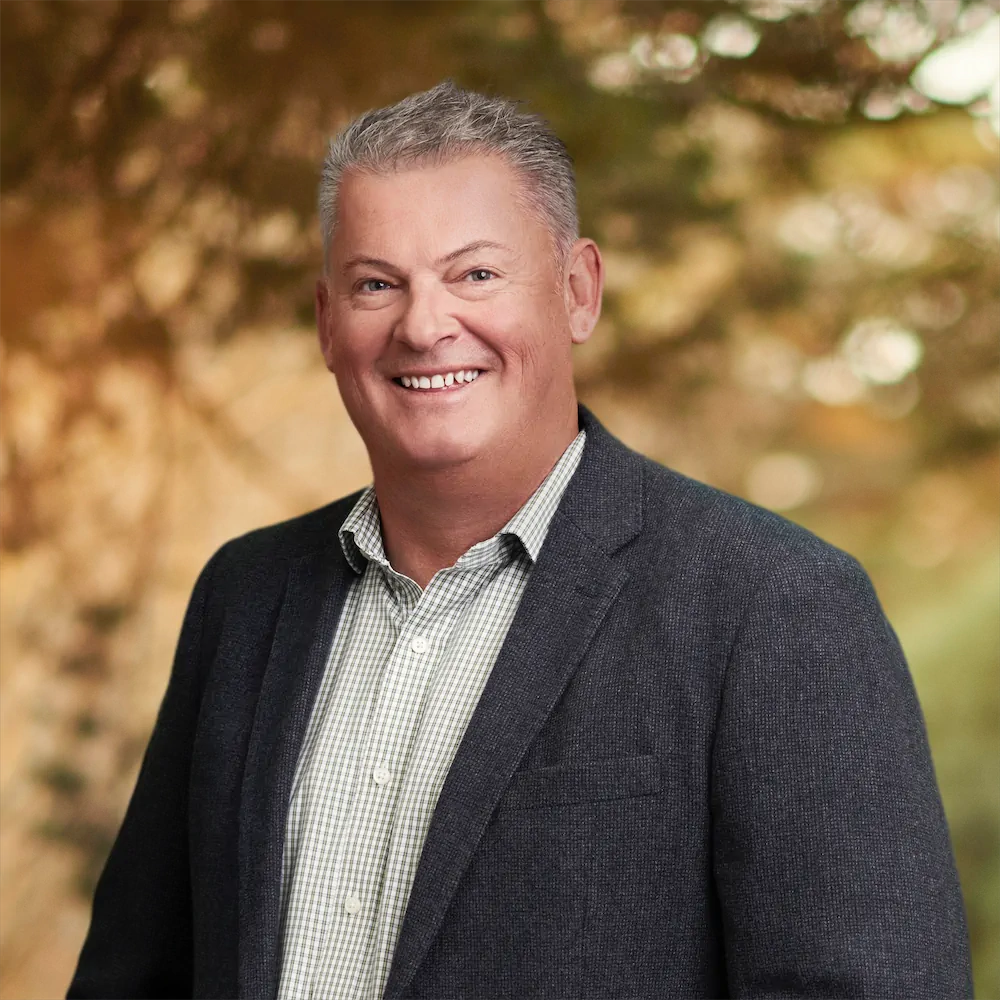
An interview with Senior Valuer, Peter Adlington.
Senior Valuer Peter Adlington is one of our longest-serving team members. Fresh off winning the ‘Outstanding Contribution to Property Award’ at the 2023 API Excellence in Property Awards in Melbourne, we sat down with Peter to reflect on his 25-year career with Walsh & Monaghan.
Peter, can you explain how you first got into property valuation?
In my early 20s, I was working in a family-owned real estate business. I liked the property side of things, but I didn’t really enjoy being out on Saturdays and Sundays. My grandfather was one of the original partners in that business, and he was a valuer as well. He suggested I start studying it, which I did.
I also knew John Austin (father of current Walsh & Monaghan Director, Darren Austin) quite well, he was an old family friend, and he actually gave me my start with Walsh & Monaghan. The business was still quite small at that time, I think I was their fourth valuer, but John really inspired me in my career. I really liked the type of work he was doing and was excited to be doing something similar.
Valuation seems like quite a niche career. What aspects have you found most interesting or rewarding over the years?
It is a niche industry, for sure. But within ‘valuation’, there are particular specialisations you can take on, and I found it quite rewarding to go down the line of compensation valuation, being an expert witness and doing court work. I’ve been lucky enough to be doing that for the last 10 years or so.
I’ve also found it very rewarding to mentor other valuers as they’re starting out in the industry. I enjoy that aspect a lot.
During your time in property valuation, what have been some of the most significant changes?
The first was when the industry began requiring qualifications. In the early days, many of us simply went to TAFE. It became a lot harder when University degrees became a prerequisite to work in the industry.
The other big change, of course, is technology. When I started with Walsh & Monaghan, valuers didn’t have computers. We all shared the one computer to look up sales data. The Internet was new and so much of our work was hand-written. Once new technology was embraced in the 1990s and early 2000s, and new platforms became available, it made our jobs much easier and quicker. For example, using aerial photography instead of paper topography maps made a huge difference. I can’t remember the last time I pulled out a paper map – everything we need is on our screen.
For the firm, another big change has been the amount of government work and consulting we do compared to my early days. It now accounts for about 80% of what we do.
What qualities are essential for success in the industry?
A good valuer needs to have excellent attention to detail because a big part of our work is research. You really need to have a good grasp of what you’re valuing and the different aspects that relate to a property, you can’t just have a cursory look. You also need to be comfortable interviewing people. It’s really important to give the landowner, or whoever you’re working for, the time and space to explain their situation so you accurately and fairly produce a valuation for them. They can tell you a lot about a property that you may not see on an initial inspection.
Over your career at Walsh & Monaghan, what achievements or milestones are you particularly proud of?
After working in a specialised field where there’s a relatively small cohort – compulsory acquisition – being recognised by my peers is very satisfying. Another personal milestone was becoming a director when I was 34. I’d been at Walsh & Monaghan for five years at that point.
What advice would you give to recent graduates considering a career in property valuation?
Valuing is a really varied career. Whether it’s a particular type of property, location, or a particular client type such as government, banking or some of the big corporates, there are so many different specialties.
It’s also a job that means you’re not going to be stuck behind a desk all the time, particularly at Walsh & Monaghan. You can get out and about and enjoy the land around you.
People joining this industry are always learning, and there are so many opportunities to progress through your career. If you choose to keep learning and challenging yourself, you’ll have great prospects.
How do you feel about the future of property valuation? What opportunities or challenges do you see for the next generation of valuers?
One of the biggest things we’re seeing is the changing use of technology and, certainly with the rise of AI, there’s a lot of talk of automated valuation and statistic models. These can certainly help our work and make us more efficient. However, the longer you’re in the industry, the more you understand there’s nothing that can replace the human aspect of what we do. Experience, relationships, and the personal insights we gather. You don’t get a good picture of a property until you get out there and have a look at it and talk to the landowners. AI can’t really do that. But we can expect drones to play a part in our work, especially in rural areas, for efficiencies in gathering some data, initial research and inspections which is useful for hard-to-reach properties.
What does winning the 2023 API Excellence in Property Award mean to you?
It was actually quite a shock at first, because I didn’t even know I was nominated – I was simply told to get to Melbourne for the night! Reflecting on it now, it’s quite humbling to be recognised with an award like that, particularly when I see the other people who were nominated. There are some outstanding people working in this industry.
What does it mean to work across regional areas of Australia?
I love it for so many reasons. For one thing, you’re getting such a variety of work. There are some decent sized urban centers in regional Australia, but you also have the rural and coastal properties. I find the variety very interesting, there can be quite a bit of travel which is always great to see more of our country.
You also get to develop long-lasting relationships with clients. In rural areas, people tend to stay in their job for longer periods, compared to the city. The same goes for colleagues too, people tend to hang around longer when they find the right job and the right culture in the workplace. Walsh & Monaghan is a good example of this with some pretty long tenures, me included!
What’s the most interesting valuation you’ve done over the years?
We’ve had to value some pretty unusual things! A few years ago, I had to value part of Martin Place for a new metro station, but it was just a hole in the ground – there was no land – just air! More recently, I had to value the new airport at Badgerys Creek.
2023 marks a significant milestone for Walsh & Monaghan. If you were able to share a beer with the founders, Ulrick Walsh & Stan Monaghan, how would you describe what the business has become over the past 100 years?
My great-grandfather actually did business with them! I found an old subdivision plan of a property in Nowra that had all their names on it. If I could talk to them now, I’d reassure them that, in many respects, Walsh & Monaghan is still a local firm. But we don’t sell chooks anymore like when they first started! I think they’d be surprised with how big we have become and how many we have in the team now, but even more shocked that we’re turning 100 this year! We’re one of a handful of local businesses that are still operating since the turn of the 20th Century. Whilst we have a foot firmly in the local community, we have shown that it’s possible to make a big impact on a national scale and keep attracting more and more talent.
If you’re considering an exciting career in property valuation, we’re always looking for the next star in the industry. Get in touch and talk to our team about starting a career in in one of the oldest and most successful valuation firms in the country.